You Won’t Believe What I Found While Shopping in Udaipur
Shopping in Udaipur isn’t just about buying souvenirs—it’s a full sensory journey. From bustling bazaars to quiet artisan workshops, every corner tells a story. I wandered through narrow lanes filled with the scent of spices and hand-dyed fabrics, stumbling upon hidden gems I never expected. This is more than retail therapy; it’s a deep dive into Rajasthani craftsmanship and culture. If you think shopping is just transactional, Udaipur will change your mind—completely.
The Soul of Udaipur: Where Craft Meets Culture
Udaipur, often called the 'Venice of the East' for its shimmering lakes and palatial silhouettes, holds a quieter yet equally powerful identity as a sanctuary of traditional Indian artisanship. Here, shopping transcends commerce and becomes a dialogue with history. The city's royal past—rooted in the Mewar dynasty that ruled for centuries—has nurtured an enduring culture of patronage for local crafts. Unlike mass-market destinations where souvenirs are churned out in factories, Udaipur’s goods are born from generations of meticulous handwork. Miniature paintings, detailed with such precision that a single brushstroke might take hours, depict scenes from epics like the Ramayana or portray the elegance of Rajput court life. These are not mere decorations; they are visual heirlooms.
Equally significant are the textiles, where block printing, hand embroidery, and natural dyeing techniques have been passed down through families for hundreds of years. The intricate patterns found on a cotton scarf or a bedspread are not random—they carry symbolic meanings, often linked to fertility, protection, or celebration. When visitors purchase these items, they are not only acquiring beauty but also supporting a living tradition. In many rural villages surrounding Udaipur, entire communities depend on craft as their primary livelihood. A single handwoven shawl might take days to complete, with every thread placed by hand. This slow, intentional process stands in stark contrast to fast fashion, reminding us of the dignity in craftsmanship.
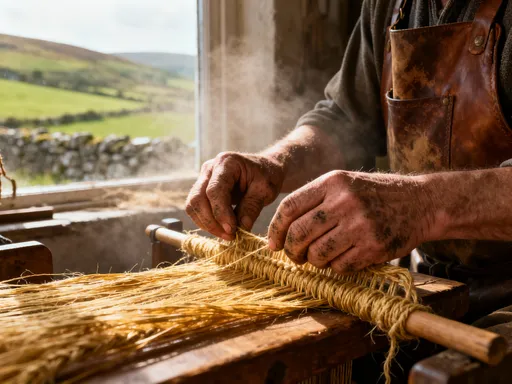
What makes Udaipur’s craft culture especially meaningful is the accessibility of the artisans themselves. Unlike museums where art is displayed behind glass, here, visitors can watch painters at work, observe weavers at their looms, or speak with women who hand-embroider delicate mirror work onto fabric. These interactions create emotional resonance. You begin to see the person behind the product—the calloused hands, the focused eyes, the quiet pride. It transforms shopping from a transaction into a human connection. In choosing to buy handmade, travelers contribute directly to the preservation of skills that might otherwise fade in the face of industrialization.
City Palace Market: Chaos with Charm
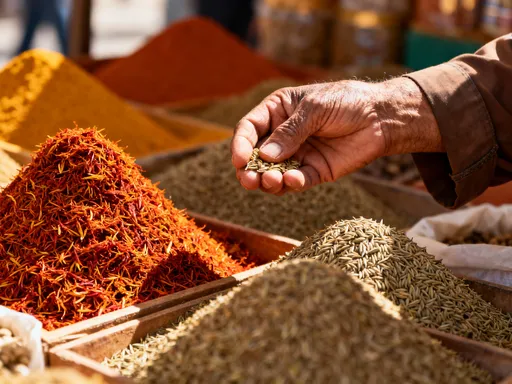
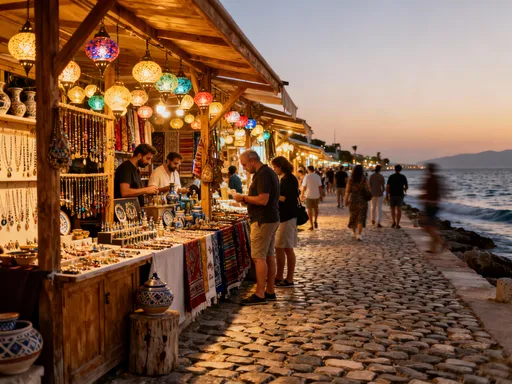
Nestled at the foot of the majestic City Palace, with views of Lake Pichola shimmering in the distance, lies one of Udaipur’s most vibrant shopping zones. The City Palace Market is a sensory overload in the best possible way. As you step into its narrow lanes, the air thickens with the scent of sandalwood, incense, and freshly ground turmeric. Colorful stalls spill onto the cobblestones, draped in hand-blocked fabrics, glittering with silver jewelry, and piled high with leather goods. Vendors call out greetings in cheerful, practiced tones—'Madam, just look!'—but there’s no aggression, only the warmth of shared exchange.
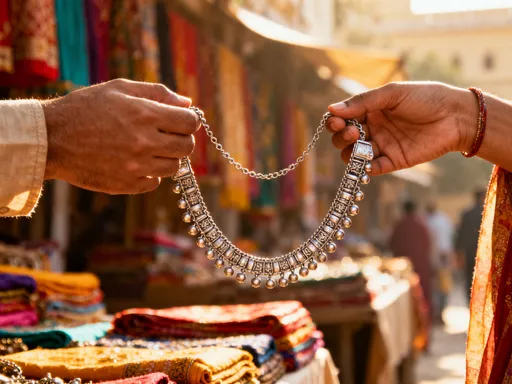
This market caters heavily to tourists, which means variety and visibility, but also a mix of authenticity. Among the treasures, you’ll find genuine camel leather bags—soft, supple, and surprisingly lightweight—crafted by artisans who have worked with leather for decades. Equally popular are the embroidered juttis, traditional Rajasthani footwear adorned with mirror work, silk thread, and sometimes even tiny beads. Each pair is unique, reflecting regional styles from Jaipur to Jodhpur. Silver jewelry, too, is a highlight: chunky bangles, statement necklaces with semi-precious stones, and delicate nose rings that catch the light with every turn.
Yet, with popularity comes the risk of imitation. It’s not uncommon to find machine-stitched juttis sold as handmade or leather goods made from synthetic materials. To navigate this, look for signs of craftsmanship: uneven stitching (a sign of handwork), natural variations in dye, and the weight and texture of the material. A genuine silver piece will have a hallmark or be stamped with a purity mark. Engaging with vendors can also help—those who are knowledgeable about their products, who can explain where an item was made or how it was crafted, are more likely to be selling authentic goods.
Practical tips for visiting: go early in the morning to avoid the midday heat and crowds, wear comfortable shoes, and carry small bills. Bargaining is expected, but it should be respectful. Start at about 60% of the quoted price and negotiate with a smile. Remember, these vendors rely on daily sales for their families. A fair deal benefits both parties. And don’t rush—some of the best finds come from lingering, asking questions, and letting the rhythm of the market guide you.
Hathi Pol Bazaar: The Pulse of Local Craft
A short walk from the tourist hubbub of the City Palace Market, Hathi Pol Bazaar offers a more grounded, authentic experience. This is where locals shop, where artisans display their work in modest storefronts, and where the craft remains undiluted by mass production. The name 'Hathi Pol' means 'Elephant Gate,' a reference to the historic entrance that once guarded this part of the old city. Today, it stands as a gateway to genuine Rajasthani artistry. The atmosphere is calmer, the pace slower, and the interactions more personal.
Here, you’ll find specialty stores dedicated to specific crafts. One shop might focus solely on lacquer bangles, their surfaces polished to a high shine, painted with floral motifs in bold reds, greens, and golds. Another might specialize in brassware—hand-hammered bowls, oil lamps, and decorative elephants—each piece bearing the subtle imperfections that betray human touch. Textiles are a major draw, particularly those featuring traditional block printing and tie-dye techniques like bandhani and leheriya. The latter, with its wavy, ocean-like patterns, is especially popular during monsoon and festival seasons.
What sets Hathi Pol apart is the visibility of the creative process. In small workshops tucked behind shopfronts, you might see an artisan carving intricate patterns into a wooden block, which will later be used to stamp fabric. Or you might watch a woman patiently dipping cloth into vats of natural indigo, the dye deepening with each immersion. These are not staged performances for tourists; they are real moments of labor and artistry. Visitors are often welcome to observe, but etiquette matters. A quiet presence, a respectful distance, and a simple 'May I watch?' go a long way. Many artisans are happy to explain their work if approached kindly.
Shopping here feels more intimate. Prices are often lower than in tourist-heavy areas, not because the quality is lesser, but because overheads are minimal. A handwoven cotton dupatta might cost half what it would in a boutique near the palace. And because the clientele is local, the inventory is curated for everyday use, not souvenir appeal. This means deeper authenticity—clothing designed to be worn, not just displayed. For travelers seeking meaningful souvenirs, Hathi Pol Bazaar is a goldmine of understated beauty.
Shilpgram: A Living Craft Village Experience
Just outside Udaipur’s city center lies Shilpgram, a rural arts complex that redefines what a shopping destination can be. Spread across 70 acres, this open-air museum and cultural village was established to preserve and promote the crafts of western India, particularly those from tribal communities across Rajasthan, Gujarat, and Madhya Pradesh. It’s not a static exhibit—Shilpgram is alive, especially during its annual crafts fair, when hundreds of artisans arrive to demonstrate their skills, perform traditional music, and sell their work directly to visitors.
Walking through Shilpgram feels like stepping into a living tapestry. Mud huts with thatched roofs represent different regional architectural styles. Inside, women weave on handlooms, men carve wood, and potters shape clay on foot-powered wheels. The air hums with folk songs—drumbeats, flutes, and harmonious voices—creating a soundtrack that feels timeless. The sensory experience is profound: the rough texture of a handwoven basket, the earthy smell of natural dyes, the cool smoothness of a polished terracotta pot. Every object here tells a story of place, of community, of resilience.
What makes Shilpgram especially valuable is its ethical model. Artisans receive full value for their work, with no middlemen taking a cut. Visitors buy directly from the makers, often after watching them create the very item they’re purchasing. A woman from the Bhil tribe might show you how she stitches a bamboo mat, explaining that each pattern represents a part of her ancestral land. When you buy from her, you’re not just acquiring a mat—you’re acknowledging her skill, her heritage, and her right to fair compensation.
The seasonal fairs, usually held between October and February, are the best time to visit. They feature rotating displays of regional crafts—Kutch embroidery, Marwar pottery, Malwa tribal paintings—offering a broader view of India’s artistic diversity. Even outside festival times, Shilpgram hosts workshops where visitors can try their hand at pottery, weaving, or block printing. These hands-on experiences deepen appreciation for the time and skill involved. For families, it’s an educational journey; for solo travelers, a moment of quiet inspiration. Shilpgram proves that shopping can be both joyful and just.
Bapu Nagar: The Local’s Choice for Fashion & Textiles
If you want to shop like a Udaipuri, head to Bapu Nagar. This bustling commercial neighborhood, a short rickshaw ride from the old city, is where residents come for everything from groceries to garments. Unlike the tourist-centric markets, Bapu Nagar offers a more practical, everyday shopping experience—but one that’s rich in textile treasures. The streets are lined with fabric shops, their storefronts piled high with rolls of silk, cotton, and georgette, their colors so vivid they seem to glow under the sun.
This is the place to find authentic bandhani, the traditional tie-dye technique where tiny knots are tied by hand before dyeing, creating intricate dot patterns. The process is labor-intensive—hundreds of knots per yard—and the results are stunning. You’ll also find gota patti work, a form of embroidery using gold or silver ribbon stitched into geometric or floral designs, often used on bridal wear. Silk sarees, particularly Banarasi and Udaipuri varieties, are another specialty, available in a range of weaves from lightweight chiffon to rich, brocade-heavy fabrics.
One of the biggest advantages of shopping in Bapu Nagar is the ability to get custom tailoring. Many shops have in-house seamstresses who can stitch a salwar kameez, kurta, or even a lehenga within 24 to 48 hours. Bring a photo or describe what you want, and they’ll make it to your measurements. This is ideal for travelers who want a personalized piece but don’t have time to wait weeks for delivery. Prices are reasonable, especially if you buy fabric and tailoring together. A full outfit, including fabric and stitching, might cost between $30 and $80, depending on materials.
Haggling is less common here than in tourist markets, as prices are already close to wholesale. Still, a polite request for a small discount—especially if buying multiple items—may be honored. The key is to be respectful. Shop owners appreciate genuine interest, so take time to feel the fabrics, ask about origins, and compliment the work. You’ll often be offered chai or water, a small gesture of hospitality that turns shopping into friendship. Bapu Nagar reminds us that fashion is not just about appearance—it’s about identity, celebration, and community.
What to Buy (and What to Skip)
With so many options, it helps to know what’s truly worth taking home. Start with miniature paintings—small, detailed works on paper or ivory (now often replaced with eco-friendly alternatives). Look for pieces signed by the artist and painted with natural pigments. A genuine miniature can cost between $50 and $200, depending on complexity. Next, mojris—traditional leather shoes—are both stylish and comfortable. Authentic ones have hand-embroidered details and flexible soles. Expect to pay $20–$40 for a quality pair.
Blue pottery, though originally from Jaipur, is widely available in Udaipur and prized for its cobalt-blue glaze and intricate white patterns. True blue pottery is made from quartz, not clay, and has a slightly translucent quality. Avoid pieces that look too perfect—machine-made imitations lack the subtle flaws of handcrafting. Prices range from $10 for small bowls to $60 for large vases. Silver jewelry, particularly tribal designs from the Bhil or Garasia communities, makes a meaningful keepsake. Look for hallmarked silver and natural stone settings. A simple pendant might cost $30, while a full set could be $150.
On the flip side, there are items best left behind. Fake gemstones—especially 'rubies' and 'emeralds' sold in bright displays—are almost always glass. Overpriced 'antiques' with no provenance are likely modern reproductions. Machine-printed fabrics sold as 'hand-blocked' can be spotted by their uniform patterns and lack of ink variation. And while camel leather is real, ensure it’s ethically sourced—some vendors mislabel other leathers as camel. When in doubt, buy less but better. A single, well-chosen piece carries more value than a suitcase full of trinkets.
How to Shop Responsibly and Thoughtfully
Shopping in Udaipur is not just about what you bring home—it’s about how you engage with the people who made it. Responsible shopping means recognizing that every item has a human story. A painted pot, a stitched scarf, a hammered brass lamp—each represents hours of labor, skill, and cultural knowledge. Paying fair prices isn’t charity; it’s justice. Bargaining is part of the culture, but it should never come at the expense of the artisan’s dignity. Aim for a price that feels fair to both sides, not the lowest possible number.
Carry small cash in Indian rupees—many small vendors don’t accept cards, and having change makes transactions smoother. Engage in conversation when possible. Ask, 'How long did this take to make?' or 'Where is your village?' These questions show respect and often lead to memorable exchanges. Avoid pushing for discounts on items that are already reasonably priced, especially in places like Shilpgram, where artisans receive direct income.
Consider the environmental impact, too. Choose natural fibers over synthetics, and avoid plastic packaging. Many artisans are now using cloth bags or paper wraps—support those who do. And remember, the most valuable souvenirs aren’t always objects. A photograph of an artisan at work, a shared laugh with a vendor, the memory of a folk song heard in Shilpgram—these are the treasures that last.
In the end, shopping in Udaipur is not about consumption. It’s about connection. It’s about carrying a piece of Rajasthan’s soul home with you—not as a trophy, but as a reminder of beauty, resilience, and the enduring power of human hands. When you wear that hand-embroidered scarf or place that blue pottery bowl on your table, you’re not just decorating a space. You’re honoring a tradition. And that, perhaps, is the most beautiful purchase of all.