You Won’t Believe What I Captured in Évora’s Hidden Corners
Évora, Portugal, isn’t just a dot on the map—it’s a living gallery. Wandering its cobbled streets felt like stepping into a Renaissance painting. As a photographer, I was chasing light, texture, and soul—and Évora delivered. From ancient chapels to sunlit plazas, every corner whispered history. This isn’t just travel—it’s visual storytelling. What makes this UNESCO gem a dream for lens lovers? Let me take you behind the viewfinder.
Why Évora? The Allure of a Timeless City
Located in the heart of Portugal’s Alentejo region, Évora stands as a masterclass in historical layering. This compact city, recognized as a UNESCO World Heritage site in 1986, has preserved its architectural and cultural essence across centuries. Unlike more commercialized European destinations, Évora resists the pull of mass tourism, maintaining a rhythm that feels authentic and deeply rooted in tradition. Its narrow streets, framed by whitewashed buildings with iron-grilled windows and bougainvillea-draped balconies, invite slow exploration. For the mindful traveler and the observant photographer, this is a place where time seems to pause, allowing space to truly absorb the atmosphere.
What sets Évora apart is its seamless blend of civilizations. Traces of Roman occupation remain visible in the well-preserved Temple of Diana, while Moorish influences linger in the city’s layout and architectural details. The medieval Christian era added grand cathedrals and fortified walls, all of which contribute to a rich visual tapestry. This confluence of cultures creates a cityscape that feels both ancient and alive. Each stone, archway, and alleyway tells a story—not just of conquest or religion, but of daily life unfolding across generations.
The city’s slower pace enhances its appeal. Unlike the hurried energy of Lisbon or Porto, Évora encourages contemplation. Locals gather in the central square for morning coffee, artisans display handmade goods in small boutiques, and the distant chime of church bells marks the passage of hours. This unhurried lifestyle offers photographers a rare gift: the opportunity to observe and capture moments without intrusion. There’s no need to chase fleeting scenes; instead, the city reveals itself gradually, like a photograph developing in a darkroom. It rewards patience with intimate, unguarded glimpses of Portuguese life.
For visual storytellers, Évora’s texture is irresistible. Sunlight dances across limestone facades, casting long shadows that shift with the hour. Doorways framed by wrought iron, shuttered windows with faded paint, and cobblestone streets worn smooth by centuries of footsteps—all these elements provide endless compositional possibilities. The city doesn’t perform for the camera; it simply exists, allowing visitors to engage with it on a human scale. This authenticity is what makes Évora not just a destination, but a deeply personal experience for those who come with open eyes and a respectful heart.
The Roman Temple: Stone, Light, and Shadows
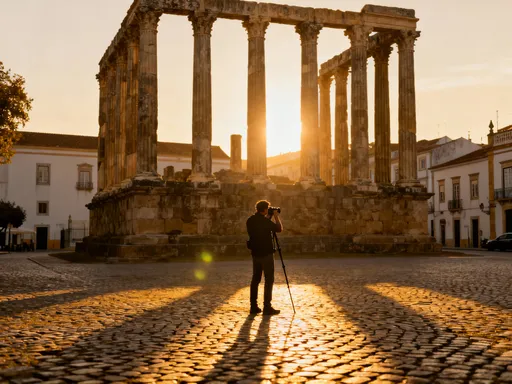
Rising proudly in the heart of Évora’s historic center, the Roman Temple—often mistakenly referred to as the Temple of Diana—is one of the most iconic landmarks in Portugal. Dating back to the 1st century AD, this Corinthian-style structure once served as a temple to Emperor Augustus and stands today as a powerful symbol of the city’s ancient roots. With its twelve towering granite columns supporting a partial entablature, the temple commands attention without overwhelming its surroundings. For photographers, it offers a compelling subject that changes dramatically with the light, time of day, and seasonal shifts.
The best moments to photograph the temple come at sunrise and during the golden hour just before sunset. At dawn, when the city is still quiet and the streets are largely empty, soft, diffused light bathes the stone, emphasizing its texture and age. The long shadows cast by the columns create strong geometric lines, perfect for leading the viewer’s eye through the frame. A low-angle shot from the front steps can highlight the temple’s grandeur against a pale morning sky, while a side perspective captures the rhythm of the columns in silhouette. As the sun climbs, the interplay of light and shadow evolves, offering new compositions every few minutes.
During midday, harsh sunlight can create high contrast, making it challenging to balance exposure. However, this is also an opportunity to focus on details—the weathered inscriptions on the stone, the moss creeping into crevices, or the way sunlight slices through the gaps between columns. A polarizing filter can help reduce glare and enhance the blue tones of the sky, adding depth to the background. For those using wide-angle lenses, incorporating the surrounding buildings and cobbled square into the shot emphasizes the temple’s integration into the urban fabric, showing how ancient and modern coexist in harmony.
In the late afternoon, the golden hour transforms the temple into a warm, glowing monument. The west-facing façade catches the low-angle sunlight, making the granite appear almost amber. This is the ideal time for atmospheric shots that convey mood and timelessness. A tripod becomes invaluable here, especially if you’re aiming for long exposures or shooting in aperture priority mode to maintain depth of field. Including human elements—such as a local walking past or a shadow crossing the square—can add scale and narrative without distracting from the main subject. The Roman Temple is more than a relic; it’s a living part of Évora’s daily life, and capturing it thoughtfully means honoring both its history and its present.
Chapel of Bones: A Haunting Beauty Through the Lens
Nestled within the Church of St. Francis, the Capela dos Ossos is one of Évora’s most evocative and contemplative spaces. Constructed in the 16th century by Franciscan monks, the chapel is lined with the bones and skulls of over 5,000 individuals, gathered from local cemeteries to remind visitors of life’s impermanence. The message above the entrance—"Nós ossos que aqui estamos, pelos vossos esperamos" (We bones that are here, await yours)—sets a solemn tone. While the subject matter is undeniably intense, the chapel offers a profound opportunity for artistic and emotional photography, provided it is approached with sensitivity and respect.
Photographing the interior requires careful technique due to the low light conditions. Flash photography is not only discouraged but often prohibited, as it can damage the fragile bones and disturb other visitors. Instead, photographers must rely on natural light filtering through small windows and ambient interior lighting. Using a camera with strong low-light performance, a high ISO setting (ranging from 1600 to 3200 depending on the model), and a wide aperture (f/2.8 or lower) allows for clear, noise-managed images without artificial light. A tripod or monopod can be useful if movement is permitted, though many visitors choose to handhold to remain unobtrusive.
Compositionally, the chapel offers rich opportunities for symmetry, pattern, and contrast. The orderly arrangement of bones—crisscrossed femurs, stacked skulls, and rib cages—creates a mosaic-like texture that can be captured in both wide and close-up shots. A wide-angle lens can convey the full scope of the space, showing how the bones cover walls, columns, and even parts of the ceiling. Meanwhile, macro or telephoto lenses allow for intimate details: the hollow of an eye socket, the curve of a vertebra, or the dust resting on a skull’s crown. These details, when framed carefully, become meditative rather than macabre.
The interplay of light and shadow within the chapel enhances its solemn beauty. Sunbeams that pierce through the upper windows create dramatic contrasts, illuminating certain sections while leaving others in darkness. These natural spotlights can be used to guide the viewer’s attention to specific areas—perhaps a single skull resting on a shelf, or a heart-shaped arrangement of bones near the altar. The dim, almost sepulchral lighting encourages slow, deliberate shooting. Every click must be intentional, every frame considered. More than just documenting a sight, photographing the Chapel of Bones becomes an act of reflection—an invitation to contemplate mortality, memory, and the passage of time through the lens.
Évora Cathedral: Framing Grandeur and Silence
Dominating the city’s skyline, the Sé de Évora—Évora Cathedral—is one of the most significant medieval religious structures in Portugal. Built between the 12th and 13th centuries, this Romanesque-Gothic hybrid stands as a fortress of faith, with its massive twin towers, crenellated walls, and imposing façade. For photographers, the cathedral presents a wealth of visual opportunities, both from the outside and within. Its exterior, constructed from local limestone, glows in the sunlight and takes on a warm, honeyed tone at golden hour. The contrast between its military-like architecture and its sacred purpose creates a compelling narrative—one of protection, power, and devotion.
From the front plaza, a wide-angle lens captures the full breadth of the cathedral’s façade, emphasizing its verticality and strength. The central rose window, flanked by two tall bell towers, serves as a natural focal point. To avoid distortion, stepping back across the square and using a mid-range focal length (around 50mm) can yield a more balanced, natural-looking image. Early morning light, coming from the east, illuminates the front steps and entrance, casting long shadows that enhance the texture of the stone. This is also the best time to photograph the cathedral with fewer tourists, allowing for cleaner, more serene compositions.
Inside, the cathedral reveals a different kind of grandeur—one defined by silence, light, and vertical space. The nave soars overhead, supported by thick columns and pointed Gothic arches. Sunlight streams through tall stained-glass windows, painting colorful patterns on the stone floor. These moments of natural illumination are fleeting but powerful. Positioning yourself near the transept during mid-morning can allow you to capture the interplay of colored light and shadow, especially when a single beam hits the altar or a side chapel. A polarizing filter can help manage reflections on glass-covered relics or polished surfaces, while a higher ISO setting ensures clarity in dimly lit corners.
The interior’s chapels, each dedicated to different saints, offer intimate spaces for detailed photography. Look for contrasts—polished wood against rough stone, candlelight against darkness, stillness against the faint echo of footsteps. Capturing these quiet moments requires patience and discretion. Rather than rushing through, allow yourself to settle into the space, observing how light shifts and how visitors move through the cathedral. A prime lens with a wide aperture (such as 35mm or 50mm at f/1.8) is ideal for low-light conditions and for isolating subjects like a single votive candle or an intricately carved confessional. The Sé de Évora is not just a building; it is a living space of worship and memory, and photographing it means capturing not just architecture, but atmosphere.
Praça do Giraldo: Where Culture Comes Alive
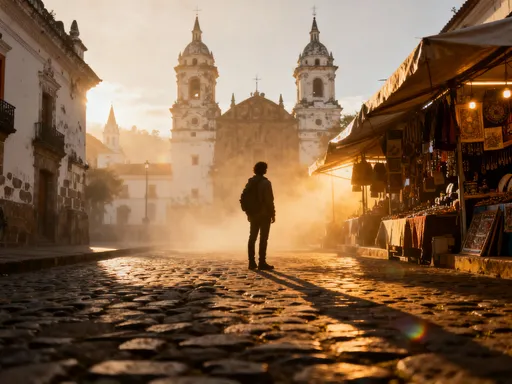
The Praça do Giraldo is the vibrant heart of Évora, a sun-drenched square where history and daily life converge. Named after Gerald the Fearless, the Christian knight who recaptured Évora from the Moors in 1165, the square has served as a marketplace, gathering place, and cultural hub for centuries. Today, it buzzes with café terraces, street performers, and locals enjoying a leisurely afternoon. For photographers, this is where candid moments unfold naturally—children chasing pigeons, couples sharing espresso, musicians tuning their guitars. Unlike staged tourist attractions, the Praça do Giraldo offers authenticity, making it a prime location for street photography that tells real stories.
The square’s geometric layout, paved in traditional Portuguese stone, provides strong compositional lines. The repeating patterns of the cobblestones act as natural leading lines, drawing the eye toward central fountains, café umbrellas, or distant archways. Shooting from an elevated angle—such as a second-floor café balcony—offers a bird’s-eye view, perfect for capturing the rhythm of movement below. A telephoto lens (70–200mm) allows you to isolate moments from a distance: a waiter balancing trays, an elderly man reading the newspaper, or a street artist sketching a portrait. These distant shots preserve the spontaneity of the scene without disrupting it.
At ground level, a 35mm or 50mm lens works best for immersive, documentary-style photography. Walking slowly through the square, observing rather than intruding, helps build a sense of connection with the environment. Look for moments of interaction—a handshake, a shared laugh, a vendor arranging fruit. These fleeting gestures carry emotional weight and can become the most powerful images of your visit. The key is to remain unobtrusive, using natural light and available shadows to your advantage. Overcast days, often underrated by photographers, can actually enhance street photography by providing soft, even lighting that minimizes harsh contrasts.
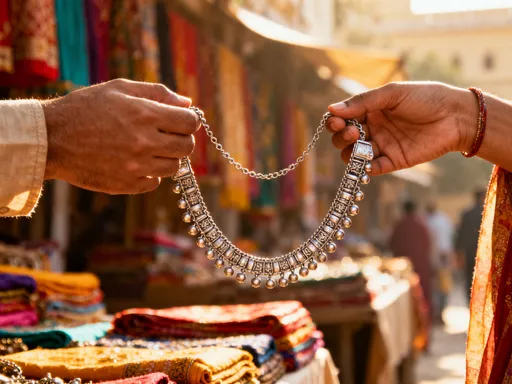
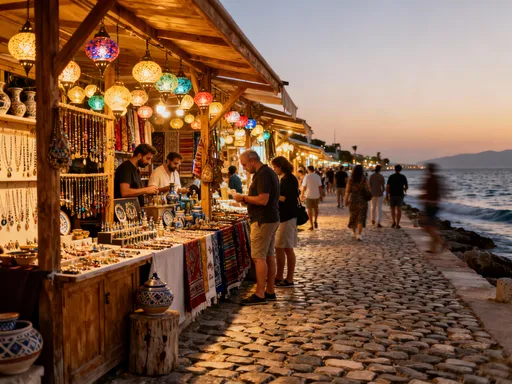
The Praça do Giraldo also hosts weekly markets and seasonal festivals, offering even richer photographic opportunities. Local artisans sell handmade pottery, woven baskets, and traditional Alentejo textiles. These events bring color, texture, and energy to the square, transforming it into a living gallery of regional culture. When photographing vendors, always ask for permission with a smile and a nod—most are happy to be included, especially if you show genuine interest. The result is not just a collection of images, but a visual diary of community, connection, and continuity in one of Portugal’s most enduring cities.
Beyond the Center: Hidden Courtyards and Local Life
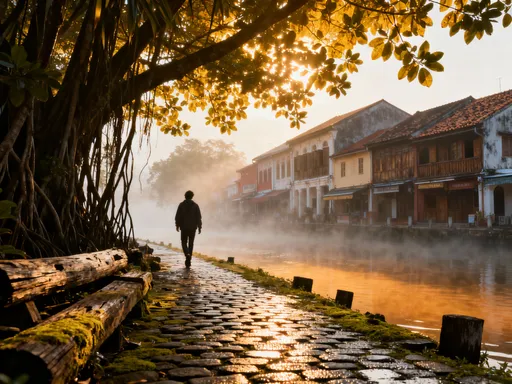
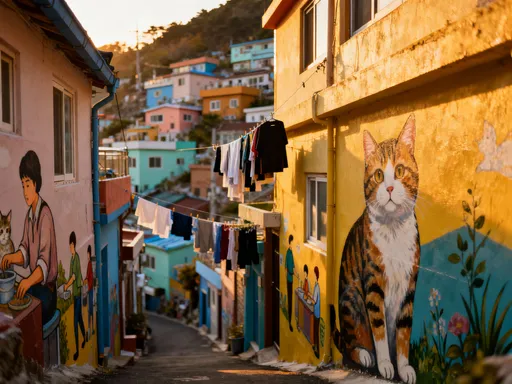
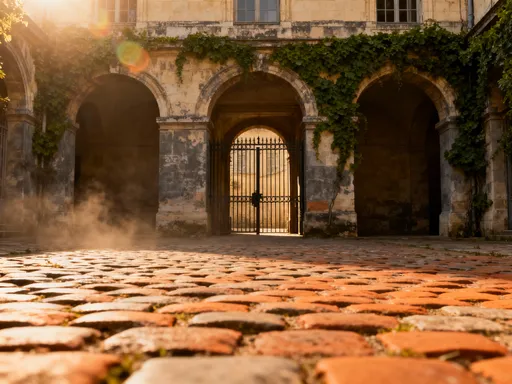
While Évora’s main attractions draw well-deserved attention, some of its most captivating moments lie just beyond the tourist path. Venture a few blocks away from the Praça do Giraldo, and you’ll discover quiet residential neighborhoods where whitewashed walls, wooden shutters, and flower-filled balconies create a serene, picture-perfect landscape. These hidden corners—often accessible through narrow archways or unmarked alleys—offer a glimpse into everyday life in Évora. Laundry flutters in the breeze, cats nap in sunlit doorways, and the scent of baking bread drifts from open windows. For photographers seeking authenticity, these areas provide a treasure trove of quiet, intimate scenes.
One of the joys of exploring these side streets is the sense of discovery. Unlike the curated beauty of postcard views, these moments feel unposed and genuine. A courtyard framed by azulejo tiles, a wrought-iron gate with a potted geranium, or an old man watering plants on his balcony—these are the details that give Évora its soul. To photograph them respectfully, move slowly and quietly. Avoid pointing your camera directly at people without acknowledgment; instead, wait for natural moments or capture scenes where human presence is implied rather than explicit—a chair left outside, a bicycle leaning against a wall, a pair of shoes by the door.
Early morning is the ideal time to explore these areas, when the light is soft and the streets are still waking up. The low-angle sun casts long shadows across whitewashed walls, creating dramatic contrasts and highlighting textures. A polarizing filter can enhance the blue of the sky and reduce glare on glossy tile surfaces. For tighter compositions, a macro lens can reveal the beauty in small details: peeling paint, rusted hinges, or the delicate veins of a leaf. These close-ups, when combined with wider environmental shots, create a layered narrative of place and presence.
Engaging with residents, even non-verbally, can enrich the experience. A simple “bom dia” (good morning) often leads to a warm smile or a wave, and sometimes, an invitation to photograph a family’s garden or a historic doorway. These small exchanges build trust and open doors—literally and figuratively—to moments that would otherwise remain unseen. The key is to approach with humility and curiosity, not as a tourist seeking content, but as a guest honoring the life that unfolds in these quiet streets. In doing so, your photographs become more than images—they become testaments to connection, respect, and the quiet beauty of ordinary life.
Photography Tips & Practical Advice for Évora
To make the most of your photographic journey in Évora, preparation is essential. Start with your gear: a lightweight mirrorless or DSLR camera is ideal for navigating narrow streets and climbing stone steps. A versatile zoom lens (24–70mm) covers most scenarios, from wide cityscapes to tighter architectural details. For low-light interiors like the Chapel of Bones or the cathedral at dusk, a fast prime lens (such as 35mm f/1.8 or 50mm f/1.4) will deliver sharper results. A compact tripod is highly recommended, especially for long exposures in dimly lit chapels or for capturing smooth, ghost-free shots of empty streets at dawn.
Timing matters. The best seasons to visit Évora are spring (April to June) and early fall (September to October), when temperatures are mild, the light is soft, and crowds are manageable. July and August bring intense heat and higher tourist volumes, which can affect both comfort and photo opportunities. Aim to shoot during the golden hours—shortly after sunrise and before sunset—for the most flattering light. Midday can be used for editing, exploring indoor sites, or enjoying a meal at a local café while observing street life.
When photographing people, always prioritize respect. In public spaces, candid shots are generally acceptable, but if you’re focusing on an individual—especially in residential areas—ask for permission with a smile or a gesture. Most locals appreciate the interest and will pose willingly. Avoid intrusive behavior, and never photograph religious ceremonies or private moments without explicit consent. Remember, great photography is not about capturing everything, but about choosing moments that matter.
Finally, embrace simplicity. Évora rewards minimalism—clean lines, natural light, and thoughtful composition often speak louder than technical complexity. Whether you’re using a professional camera or a smartphone, the most powerful images come from presence, patience, and perspective. Charge your batteries, format your memory cards, and above all, allow yourself to be present. Because in Évora, the best shot isn’t always the one you planned—it’s the one you weren’t expecting.
Évora teaches you to see deeper. It’s not about snapping postcards—it’s about capturing echoes of time. When culture, light, and silence meet, your camera becomes a translator. Whether you're a seasoned shooter or an amateur with a phone, this city invites you to slow down and truly look. In Évora, every frame tells a story. What will yours say?