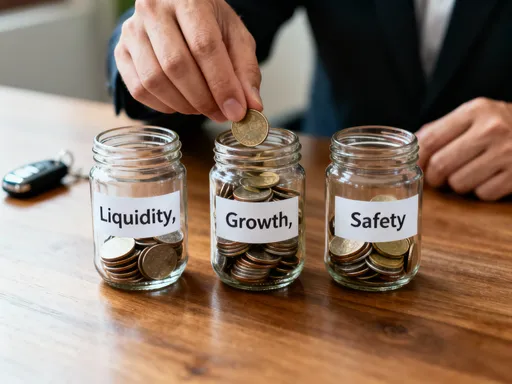
How I Tamed VAT Chaos and Slashed Costs Without Losing Sleep
VAT planning used to stress me out—endless forms, confusing rules, and the fear of overpaying. But after years of trial, error, and costly mistakes, I built a system that actually works. It’s not about loopholes or risky moves. It’s about structure, timing, and smart routines. Now, I save thousands, stay compliant, and barely think about it. This is how I turned VAT from a headache into a hidden profit tool—step by step, without the jargon.
The Hidden Cost of Ignoring VAT Planning
Many businesses treat VAT as a necessary evil—an unavoidable line item on financial statements that must be paid and filed without question. But viewing VAT solely as a compliance obligation overlooks its potential impact on cash flow, pricing strategy, and operational efficiency. When left unmanaged, VAT can quietly erode profits, distort decision-making, and expose companies to unnecessary financial risk. The real cost of poor VAT planning isn’t just in overpayments—it’s in missed opportunities, delayed refunds, and the hidden burden of reactive tax management.
Consider a small business owner who fails to claim input tax on eligible purchases. Each quarter, hundreds or even thousands of dollars in recoverable VAT slip through the cracks. Over time, this compounds into a significant loss of capital that could have been reinvested in growth, inventory, or staff. Worse still, inconsistent record-keeping increases the likelihood of errors, triggering audits that consume time, money, and peace of mind. These are not hypothetical risks—they are common consequences of treating VAT as an afterthought rather than a strategic function.
Moreover, VAT missteps can distort pricing models. A company unaware of zero-rating rules may incorrectly apply standard rates to exports, making its products less competitive abroad. Another might delay registering for VAT past the legal threshold, leading to back taxes and penalties. These issues don’t stem from intentional wrongdoing but from a lack of systematic oversight. By reframing VAT as a financial lever—not just a tax burden—businesses gain visibility into one of their largest controllable expenses. With proper planning, VAT becomes a tool for cost control, cash flow optimization, and long-term resilience.
The shift begins with mindset. Instead of reacting to deadlines, forward-thinking businesses proactively manage VAT as part of their financial strategy. This means integrating VAT considerations into procurement decisions, sales processes, and international expansion plans. It also means recognizing that every invoice, every transaction, and every supplier contract carries VAT implications. Once these connections are understood, the path to savings becomes clear: structure, consistency, and awareness.
Building a System, Not Just Filing Returns
Filing VAT returns on time is essential, but it’s only the tip of the iceberg. True VAT efficiency comes from building a repeatable, reliable system that operates year-round—not just during filing season. Many businesses fall into the trap of treating VAT as a quarterly or monthly chore, scrambling to gather records, reconcile accounts, and meet deadlines. This reactive approach is not only stressful but prone to errors. A better way exists: a structured, automated, and integrated VAT management framework that runs smoothly in the background.
At the core of this system is accurate data capture. Every sale, purchase, and expense must be recorded with VAT relevance in mind. This starts with choosing accounting software that automatically categorizes transactions by VAT treatment—standard-rated, zero-rated, exempt, or out of scope. Modern cloud-based platforms can sync with point-of-sale systems, e-commerce stores, and bank feeds, ensuring real-time accuracy. When data flows seamlessly into the accounting system, the risk of manual entry mistakes drops significantly. More importantly, it creates a single source of truth for all VAT-related activities.
Equally important is establishing regular review cycles. Monthly check-ins allow businesses to monitor VAT liabilities, track input tax recoveries, and spot anomalies early. For example, a sudden spike in non-deductible expenses might indicate a supplier classification error or a change in service type that affects VAT treatment. Catching these issues early prevents larger problems down the line. During these reviews, key stakeholders—bookkeepers, accountants, and financial managers—should align on thresholds, timing strategies, and compliance status.
Another critical component is accountability. Assigning clear roles ensures that no task falls through the cracks. One person might be responsible for invoice validation, another for reconciling VAT accounts, and a third for preparing submissions. This division of labor not only improves accuracy but also builds internal expertise. Training team members on basic VAT principles empowers them to make better decisions daily—such as verifying supplier VAT numbers or correctly coding international transactions.
Ultimately, the goal is not to do more work, but to work smarter. A well-designed system reduces last-minute rushes, minimizes human error, and frees up time for strategic thinking. When VAT management becomes routine, businesses stop fearing audits and start leveraging their compliance strength as a competitive advantage.
Timing Is Everything: When to Act, Not React
In VAT planning, timing is often more powerful than rate changes. While tax rates are fixed by law, the timing of transactions offers flexibility that smart businesses can use to their advantage. Small, legal adjustments to when purchases are made, invoices are issued, or assets are acquired can have a meaningful impact on cash flow and tax liability. This isn’t about manipulation—it’s about alignment with fiscal cycles and regulatory thresholds.
One of the most effective timing strategies involves managing input tax claims. Businesses can only reclaim VAT on expenses incurred within a specific period, and delays in submitting returns or recording purchases mean lost recovery opportunities. For instance, a company that waits until the end of the quarter to process supplier invoices may miss the window to claim input tax for that period. By implementing a policy of immediate invoice entry and monthly reconciliation, businesses ensure they capture every eligible deduction without delay.
Another powerful tactic is adjusting the timing of capital expenditures. Suppose a business plans to purchase new equipment subject to standard VAT. If cash flow is tight, it may choose to defer the purchase until the next accounting period when it expects higher output tax liabilities. This creates a natural offset, reducing the net VAT payment due. Conversely, if the business anticipates a VAT refund, accelerating the purchase could increase the refund amount, improving liquidity sooner.
Registration thresholds also present timing opportunities. In many jurisdictions, businesses must register for VAT once their taxable turnover exceeds a certain limit. However, the exact timing of registration can affect cash flow. Registering too early means charging VAT to customers before reaching the threshold, potentially making prices less attractive. Waiting too long risks penalties and back taxes. A strategic approach involves monitoring sales trends closely and preparing for registration well in advance—ideally three months before the expected threshold breach. This allows time to update invoicing systems, inform clients, and train staff.
Invoice date control is another subtle but impactful tool. Issuing an invoice just before the end of a quarter can bring forward output tax liability, which may be undesirable if the business expects a refund. Delaying the invoice by a few days—into the next period—can defer the liability and preserve cash. As long as the transaction is legitimate and the delay is reasonable, this practice is fully compliant. The key is consistency and documentation, so there’s no appearance of manipulation.
These examples illustrate how proactive timing decisions—rooted in planning, not panic—can generate real savings. They require no special permissions or complex structures, just awareness and discipline. When businesses treat timing as a strategic lever, VAT transforms from a passive cost into an active financial tool.
The Power of Clean Records (And How to Keep Them)
Clean, accurate records are the foundation of effective VAT management. Without them, even the best strategies collapse under the weight of confusion, errors, and audit exposure. Tax authorities don’t just expect compliance—they demand proof. And that proof lies in the quality of documentation: invoices, receipts, bank statements, and transaction logs. When records are disorganized or incomplete, businesses risk missing deductions, facing penalties, or enduring lengthy investigations.
One of the most common pitfalls is poor expense categorization. Not all purchases are treated the same under VAT rules. Some are fully deductible, others partially, and some not at all. A meal with a client might be a non-deductible entertainment expense, while a business seminar registration could qualify for full input tax recovery. Misclassifying these items leads to incorrect VAT calculations and potential clawbacks during an audit. To prevent this, businesses should establish clear internal guidelines on what constitutes a deductible expense and train staff accordingly.
Supplier invoice validation is equally crucial. Before entering an invoice into the system, it must be checked for completeness: correct VAT number, proper tax rate, accurate description of goods or services, and a valid date. Missing any of these elements can invalidate the right to reclaim input tax. Some companies implement a two-step approval process—first by the department requesting the purchase, then by finance—to ensure accuracy. Digital tools like OCR (optical character recognition) software can automate much of this verification, reducing manual effort and increasing reliability.
Maintaining a digital audit trail is now considered best practice. Paper receipts get lost, emails get buried, and spreadsheets get corrupted. Cloud storage solutions linked to accounting platforms create a secure, searchable archive of all VAT-relevant documents. Each file can be tagged by date, vendor, category, and VAT treatment, making retrieval fast and stress-free. This not only supports compliance but also speeds up internal reviews and external audits.
Equally important is consistency in record-keeping habits. Waiting until the end of the quarter to organize documents creates a backlog and increases the chance of omissions. Instead, businesses should adopt a “record as you go” approach. Daily or weekly uploads of receipts, paired with real-time coding in accounting software, keep the system current. Automated reminders can prompt users to submit outstanding expenses, closing the loop before discrepancies grow.
Clean records do more than satisfy regulators—they empower smarter decision-making. With accurate data, business owners can analyze spending patterns, identify high-VAT-cost areas, and negotiate better terms with suppliers. They can also forecast VAT liabilities with greater precision, aiding cash flow planning. Ultimately, good record-keeping isn’t just about compliance; it’s about control, clarity, and confidence.
Cross-Border Trade? Don’t Let VAT Slow You Down
For businesses expanding beyond domestic markets, cross-border trade opens new revenue streams—but it also introduces complex VAT rules. Different countries have different rates, registration thresholds, and compliance requirements. Without careful planning, international sales can lead to double taxation, unexpected liabilities, or missed recovery opportunities. Yet, with the right understanding, businesses can navigate these challenges efficiently and maintain competitiveness across borders.
One of the most important concepts in cross-border VAT is the place of supply. This determines which country has the right to tax a transaction. For goods, it’s usually where the shipment arrives. For services, it depends on the customer’s location and type of service. Misjudging the place of supply can result in charging the wrong rate—or none at all—leading to corrections and penalties. For example, a UK-based consultant providing services to a German client may need to account for VAT in Germany under the reverse charge mechanism, rather than charging UK VAT.
The reverse charge is a key tool in B2B cross-border transactions. Instead of the supplier charging VAT, the customer accounts for it on their own return. This prevents double taxation and simplifies compliance for the seller. However, it requires both parties to have valid VAT numbers and proper documentation. Businesses engaging in such transactions must verify their clients’ VAT status through official databases like the European Commission’s VIES system and retain proof of validation.
E-commerce sellers face additional layers of complexity, especially under rules like the EU’s One-Stop Shop (OSS) or Import One-Stop Shop (IOSS). These systems allow businesses to file a single VAT return for all EU sales, avoiding the need to register in multiple countries. However, eligibility depends on turnover thresholds and the nature of goods sold. Low-value imported goods, for instance, may qualify for IOSS, allowing VAT to be collected at checkout and remitted centrally—bypassing customs delays and improving customer experience.
Distance selling thresholds are another critical consideration. When a business sells goods from one EU country to consumers in another, it must monitor cumulative sales to that country. Once the threshold is exceeded—typically €100,000 or €35,000 depending on the member state—it must register for VAT in the destination country and charge local rates. Failing to track this can lead to sudden registration demands and back taxes. Automated e-commerce platforms can help by flagging when sales approach these limits, giving businesses time to prepare.
Despite the complexity, the principles remain the same: accurate classification, timely registration, and meticulous record-keeping. By integrating cross-border VAT rules into their sales and logistics workflows, businesses can expand internationally without fear of compliance overload. The key is preparation—understanding the rules before launching into new markets, not after problems arise.
Turning Compliance into Competitive Advantage
Most businesses see VAT compliance as a cost center—an unavoidable expense with no direct return. But forward-thinking companies are beginning to recognize that strong VAT management can actually enhance their market position. When handled transparently and efficiently, VAT compliance becomes a signal of reliability, professionalism, and operational excellence. Clients and suppliers notice when invoices are accurate, refunds are processed quickly, and tax documentation is readily available.
Consider a supplier known for issuing clean, detailed invoices with correct VAT treatment. This level of precision reduces disputes, speeds up payment cycles, and builds trust. In contrast, a supplier with inconsistent or incorrect invoicing creates friction, delays, and suspicion. Over time, the reliable partner gains preferential treatment—better payment terms, priority delivery, and stronger negotiation leverage. In this way, VAT accuracy becomes a quiet differentiator.
Similarly, businesses that reclaim input tax swiftly and accurately demonstrate financial discipline. When negotiating with vendors, they can point to their efficient tax processes as evidence of sound management. Some even use their VAT readiness as a selling point when bidding for contracts, particularly in regulated industries where compliance history matters. Auditors and investors also view strong tax controls as a sign of governance maturity, which can improve access to financing and partnerships.
Customer experience is another area where VAT efficiency pays off. Online stores that correctly apply VAT at checkout—based on the buyer’s location—avoid surprise charges at delivery. This transparency reduces cart abandonment and increases satisfaction. Platforms using IOSS or OSS systems to handle cross-border VAT seamlessly offer a smoother buying journey, giving them an edge over competitors who pass VAT and duty costs to the customer upon arrival.
Internally, a well-managed VAT system frees up resources. Finance teams spend less time correcting errors and more time analyzing data, forecasting liabilities, and supporting strategic decisions. Employees gain confidence knowing the business is audit-ready at any moment. This operational agility allows companies to respond faster to market changes, scale more efficiently, and avoid the stress of last-minute compliance scrambles.
In essence, VAT compliance doesn’t have to be a burden. When approached with structure and foresight, it becomes a source of strength—a foundation for trust, efficiency, and growth.
Avoiding the Traps: Common VAT Mistakes (And How to Dodge Them)
Even experienced businesses make VAT mistakes—not out of negligence, but because the rules are nuanced and constantly evolving. A single misclassification can trigger a chain reaction of errors, leading to overpayments, missed recoveries, or audit findings. The good news is that most common pitfalls are preventable with awareness, training, and simple checks.
One of the most frequent errors is confusing zero-rated supplies with exempt supplies. Both result in no VAT being charged to the customer, but they have very different implications for input tax recovery. Zero-rated items—like most food, books, and exports—allow full recovery of input VAT. Exempt supplies—such as financial services, insurance, or residential rent—do not. Charging exempt status to a zero-rated product means losing the right to reclaim associated input tax, which can cost thousands over time. A clear classification guide and periodic review can prevent this costly mix-up.
Partial exemption is another area of confusion. Businesses that make both taxable and exempt supplies must calculate how much input tax they can reclaim. This often involves applying a special fraction or using a de minimis rule. Failing to apply these correctly leads to overclaims, which tax authorities will later disallow. A standardized calculation method, documented annually, ensures compliance and consistency.
Misclassifying services is equally risky. Digital services, consulting, and subscriptions often have different VAT treatments depending on the customer’s location and status. Applying domestic rules to international clients can result in undercharging or overcharging VAT. Using automated tax determination tools within accounting or e-commerce platforms helps ensure correct application based on real-time rules.
Finally, missing registration deadlines remains a persistent issue. Some businesses assume they’re below the threshold only to discover later that they’ve exceeded it based on a 12-month rolling total. Others fail to register in foreign jurisdictions when required for cross-border sales. The solution lies in continuous monitoring—setting up alerts, reviewing sales data monthly, and consulting with tax advisors when entering new markets.
The best defense against these mistakes is a simple, repeatable checklist. Before filing each return, businesses should verify: all invoices are coded correctly, supplier VAT numbers are validated, cross-border rules are applied, and partial exemption calculations are updated. This routine doesn’t take long but prevents the vast majority of errors. Prevention, not correction, is the hallmark of a mature VAT strategy.
VAT as a Lever, Not a Liability
When handled systematically, VAT planning stops being a chore and starts creating value. It’s not about gaming the system—it’s about clarity, control, and consistency. With the right approach, businesses don’t just save money; they gain agility, reduce stress, and build a stronger financial foundation. The real win? Knowing exactly where your money goes—and how to keep more of it.