How I Protect My Money Without Losing Sleep – A Real Talk on Smarter Risk Moves
What if protecting your money didn’t mean hiding it under a mattress? I used to think safe meant boring—until I learned how smart risk assessment transforms asset preservation. It’s not about avoiding risk, but understanding it. This is how I redesigned my strategy, stayed calm during market swings, and kept my wealth steady—without chasing wild returns. Let me walk you through the real game-changer most people overlook. True financial safety isn’t found in freezing your money in low-yield accounts or reacting to every headline. It’s built through awareness, structure, and emotional discipline. The peace of mind I now enjoy didn’t come from luck—it came from learning how to align my choices with my real needs, not my fears.
The Wake-Up Call: When “Safe” Investments Felt Riskier Than Ever
For years, I believed the safest way to protect my money was to keep it in accounts that promised stability—savings accounts, certificates of deposit, and government-backed bonds. These options felt secure because they carried little to no market volatility. There were no sudden drops, no red arrows on financial charts, and no sleepless nights worrying about losses. But over time, a quiet erosion began—one I didn’t notice at first. The value of my savings was shrinking, not in dollar terms, but in what those dollars could actually buy. Inflation, which averaged around 2% annually over the past decade, was silently reducing my purchasing power. A dollar today buys less than it did ten years ago, and that reality hit hard when I tried to plan for future expenses like home repairs, healthcare, or family travel.
It was a paradox: my account balances stayed the same or grew slightly, yet my financial security felt weaker. I realized then that risk isn’t just about losing money—it’s about losing value over time. The so-called “safe” investments I trusted were actually exposing me to a different kind of risk: the risk of falling behind. This moment of clarity changed my entire perspective. I began to question the definition of safety in personal finance. Is an investment truly safe if it fails to keep pace with the rising cost of living? The answer, for me, was no. True safety means preserving and growing real value, not just avoiding short-term losses.
This shift in thinking led me to explore alternative approaches. I started reading about real return—what your investments earn after inflation—and discovered that many traditional “low-risk” vehicles failed this test. For instance, if a savings account yields 1.5% annually but inflation is at 2.5%, the real return is negative. You’re effectively losing money in terms of buying power. This realization was uncomfortable, but necessary. It pushed me to stop equating safety with stagnation and to consider how risk could be managed, not eliminated. I didn’t want to gamble, but I also didn’t want to stand still. The goal became balance: protecting my capital while ensuring it continued to work for me over time.
Risk Assessment Isn’t Scary—It’s Your Financial GPS
Once I accepted that risk couldn’t be avoided, I needed a better way to navigate it. That’s when I discovered the power of personal risk assessment. Instead of fearing market fluctuations, I began to see them as part of a larger system—one I could understand and manage. Risk assessment isn’t about predicting the future or timing the market. It’s about knowing yourself: your emotional tolerance for loss, your financial timeline, and your life goals. Without this self-awareness, even the best investment strategy can fail because you might abandon it at the wrong moment.
I started by asking myself a series of honest questions. How would I feel if my portfolio dropped 10% in a month? Could I afford to wait five, ten, or fifteen years for my investments to recover? What am I saving for—retirement, education, a home? These answers helped me define my risk profile. I learned that risk tolerance isn’t fixed; it evolves with life circumstances. A single parent with limited income may have lower tolerance than someone with multiple income streams and emergency savings. Understanding this helped me stop comparing my choices to others and focus on what made sense for my situation.
I also began using scenario planning to test my resilience. What if the stock market dropped 20% next year? Would I need to sell investments at a loss to cover expenses? Could I maintain my lifestyle without dipping into principal? These exercises revealed gaps in my plan—like not having enough liquidity or being too concentrated in one asset class. I realized that a good risk assessment doesn’t eliminate uncertainty, but it prepares you for it. It acts like a GPS for your financial journey, recalibrating when conditions change and keeping you on course even when the path gets bumpy.
One of the most valuable tools I adopted was a simple risk questionnaire—available through many financial institutions and online platforms. It asked about my investment experience, time horizon, and reaction to hypothetical market losses. The output wasn’t a rigid prescription, but a starting point for deeper reflection. I shared the results with a financial advisor, not to hand over control, but to validate my thinking. This process gave me confidence. I wasn’t making decisions based on fear or rumors. I had a framework grounded in reality, not emotion.
Asset Allocation: Building a Portfolio That Works While You Sleep
With a clearer sense of my risk profile, I turned to asset allocation—the strategic distribution of investments across different categories like stocks, bonds, and cash equivalents. I used to think diversification meant owning a little bit of everything. But I learned that true diversification is intentional. It’s about selecting assets that behave differently under various market conditions, so when one area struggles, another may hold steady or even gain.
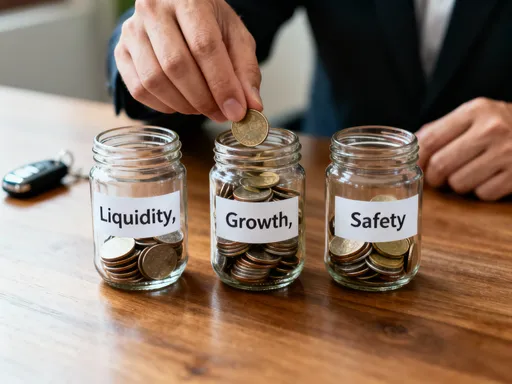
I restructured my portfolio around three core purposes: stability, growth, and opportunity. Stability assets—like short-term bonds and high-quality dividend-paying stocks—form the foundation. They don’t promise high returns, but they provide consistent income and lower volatility. Growth assets—such as broad-market index funds and real estate investment trusts—offer long-term appreciation potential. These come with more fluctuation, but over time, they’ve historically outpaced inflation. Opportunity assets are a smaller portion—typically no more than 10%—and include emerging market funds or sector-specific investments. These carry higher risk but can enhance returns when timed well.
The key was alignment. I matched each asset group to a specific goal and timeline. For example, money I might need within three to five years went into stability-focused holdings. Funds for longer-term objectives, like retirement, were allocated to growth-oriented investments. This approach removed the temptation to chase performance. I wasn’t upset when tech stocks soared and I wasn’t fully invested—because I knew my plan didn’t require me to be. My portfolio wasn’t designed to win every quarter; it was built to endure.
I also paid attention to correlation—how different assets move in relation to each other. For instance, when stocks fall, government bonds often rise, providing a natural hedge. By combining low-correlation assets, I reduced overall portfolio volatility without sacrificing long-term returns. I reviewed this mix annually, adjusting only when my goals or risk tolerance changed. This disciplined approach allowed me to stay invested through market cycles, avoiding the costly mistake of buying high and selling low.
The Hidden Risk of Doing Nothing—And Why Inflation Is the Silent Threat
One of the most underestimated dangers in personal finance is inaction. For years, I assumed that if my money wasn’t losing value on paper, I was doing fine. But I ignored the silent thief: inflation. It doesn’t show up as a dramatic loss in your account balance. Instead, it chips away at your purchasing power gradually. A gallon of milk, a doctor’s visit, a family vacation—all cost more today than they did a decade ago. If your investments don’t outpace inflation, you’re effectively losing money, even if the numbers go up.
I began measuring my returns differently. Instead of just looking at nominal gains—what the account statement said—I started calculating real returns, which account for inflation. This shift changed how I evaluated performance. A 3% return sounds decent, but if inflation is 2.5%, the real gain is only 0.5%. That’s barely enough to maintain value, let alone grow wealth. I realized that avoiding risk could actually be riskier than taking calculated, informed risks.
To fight this, I introduced inflation-protected securities into my portfolio. These are government-issued bonds whose principal adjusts with inflation, helping preserve buying power over time. I also increased my allocation to assets with income potential—like dividend-paying stocks and rental real estate—because they can grow earnings over time, often in line with or above inflation. Unlike fixed-income accounts with static interest rates, these investments have the potential to adapt.
This doesn’t mean abandoning safety. It means redefining it. True protection includes growth. I now view inflation as a benchmark, not an afterthought. Every investment decision is measured against whether it can sustain or increase real value. This mindset has kept me from hiding in low-yield accounts during periods of uncertainty. Instead, I focus on long-term resilience. The goal isn’t to beat the market every year, but to ensure that my money continues to serve me—today and decades from now.
Practical Moves: Simple Tactics That Reduce Exposure Without Sacrificing Growth
I didn’t need a Wall Street degree to make meaningful changes. What helped most were simple, repeatable habits. The first was regular rebalancing—reviewing my portfolio at least once a year and adjusting the mix if it drifted from my target allocation. For example, if stock gains pushed my equity exposure from 60% to 70%, I’d sell some and reinvest in bonds to restore balance. This practice forces you to sell high and buy low, which sounds obvious but is hard to do emotionally without a rule in place.
I also set up automatic reviews—quarterly check-ins where I assess performance, confirm alignment with goals, and verify that no single asset class had grown too large. This didn’t mean making trades every time, but it kept me engaged without being obsessive. I used calendar alerts and simple spreadsheets, not complex software. The goal was consistency, not sophistication.
Another key tactic was capping exposure. I decided never to let any single investment or category exceed 15% of my total portfolio. This limit prevented overconfidence in any one area, whether it was a booming stock or a popular fund. It also reduced the impact of any single loss. Diversification only works if you’re truly spread out—not concentrated in a few “sure things” that later prove uncertain.
Perhaps the most impactful move was building a financial buffer. I established an emergency fund in a liquid, low-volatility account—enough to cover six to nine months of essential expenses. This fund wasn’t part of my investment portfolio; it was a safety net. Its purpose was to prevent me from selling investments at a loss during a downturn to cover unexpected costs. Knowing this cushion existed gave me the freedom to stay invested for the long term, even when markets were rocky. These practical steps didn’t promise big wins, but they reduced stress and improved outcomes over time.
Emotional Discipline: Why Your Brain Is the Biggest Risk Factor
Markets don’t panic—people do. I learned this the hard way after reacting to a sudden market dip by selling part of my holdings. Within months, the market recovered, and I had locked in a loss out of fear. That mistake cost me both money and confidence. I realized then that my biggest financial risk wasn’t the economy or interest rates—it was my own behavior. Emotional decisions, driven by fear or greed, can undo years of careful planning in moments.
To combat this, I built behavioral guardrails. I set a rule: no trading within 48 hours of major news events. This cooling-off period helped me avoid impulsive moves based on headlines. I also wrote down my investment principles and posted them where I could see them—reminders like “Volatility is normal,” “Stay focused on long-term goals,” and “Don’t confuse noise with signal.” These weren’t just slogans; they were commitments to myself.
I also shared my strategy with a trusted friend who understood finance. Knowing I’d have to explain any major change added a layer of accountability. If I wanted to deviate from the plan, I had to justify it—not just to myself, but to someone else. This simple step reduced rash decisions significantly. Over time, discipline replaced reaction. I stopped checking my portfolio daily and instead reviewed it on a schedule. I stopped chasing “hot” investments and focused on consistency.
Behavioral finance research shows that investors who stay the course significantly outperform those who try to time the market. The gap isn’t due to superior stock picks—it’s due to emotional control. By designing a system that accounts for human psychology, I’ve been able to stick with my plan through ups and downs. The market will always have noise. The key is not to let it become your signal.
Looking Ahead: Building a Strategy That Evolves With Life
Financial planning isn’t a one-time event. It’s a living process that must adapt as life changes. When I first built my portfolio, I was focused on growth. Now, with more responsibilities and a shorter timeline to retirement, I’ve shifted toward capital preservation and income generation. This evolution wasn’t sudden—it was the result of regular reviews and honest self-assessment.
I now conduct a comprehensive portfolio review every quarter. I don’t do this to chase trends or react to short-term movements. Instead, I use it to ensure my strategy remains aligned with my current reality. Has my income changed? Do I have new expenses? Has my risk tolerance shifted due to health or family needs? These questions help me make intentional adjustments, not reactive ones.
I’ve also embraced flexibility within structure. My core principles remain the same—diversification, risk awareness, long-term focus—but the details evolve. For example, I’ve gradually reduced my stock exposure and increased allocations to high-quality bonds and income-producing assets. This doesn’t mean I’m abandoning growth, but I’m being more selective and cautious.
The most important lesson I’ve learned is that a resilient financial plan doesn’t resist change—it expects it. Life brings surprises: job changes, health issues, family needs. A rigid strategy can break under pressure. But one that allows for thoughtful adaptation can endure. I now see my financial plan not as a destination, but as a journey with checkpoints along the way. Each review is an opportunity to stay on track, not to start over.
Staying Safe Doesn’t Mean Standing Still
Protecting your wealth isn’t about fear—it’s about clarity. Through honest risk assessment and intentional asset allocation, I’ve built a strategy that doesn’t promise miracles, but delivers peace of mind. It’s not perfect, but it’s mine—and it works. The real win? Knowing I’m prepared, not paralyzed, no matter what the market throws my way. I no longer measure success by how high my returns climb, but by how steady I can stay. I’ve learned that true financial safety comes not from hiding money away, but from understanding it—how it grows, how it’s threatened, and how to protect it with purpose. You don’t need to be a market expert to make smart choices. You just need a clear plan, emotional discipline, and the courage to stay the course. That’s how I protect my money without losing sleep—and how you can, too.